

Language on the internet changes fast, and slang words often take on new meanings overnight. One term you’ll hear a lot in casual conversations and social media is “tweaking.” Understanding the Tweaking Meaning in Slang helps you catch the real tone behind jokes, reactions, or arguments online. Instead of guessing, knowing the Tweaking Meaning in Slang makes everyday chats clearer and more relatable.
People use this word in many situations, from playful teasing to calling out unusual behavior. Learning the Tweaking Meaning in Slang also helps you avoid misusing it or sounding out of place in conversations. With real examples and simple usage tips, the Tweaking Meaning in Slang becomes easy to recognize and use naturally. Once you get it, the term fits smoothly into modern speech.
What Does “Tweaking” Mean in Slang?
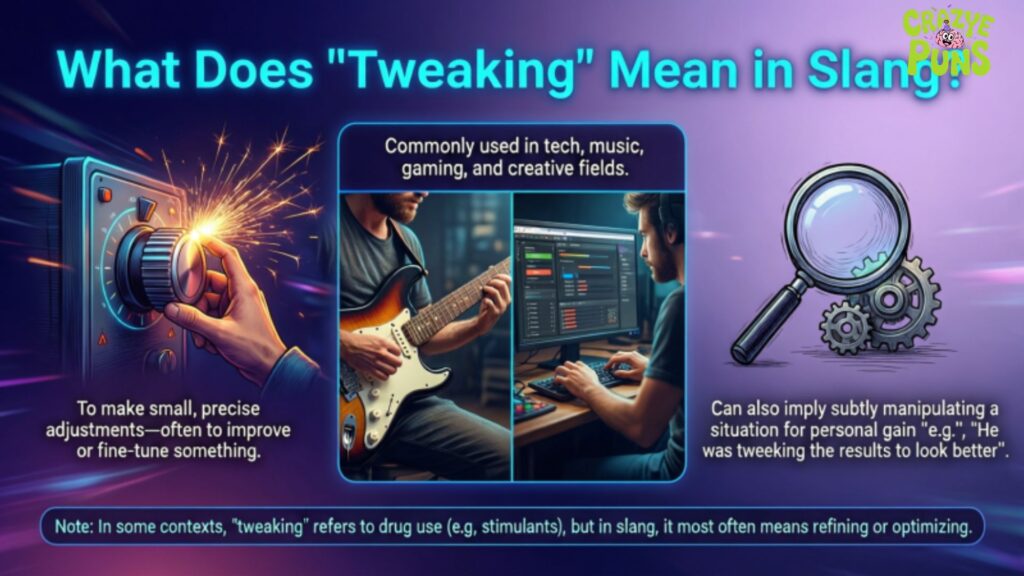
When someone says “you tweaking,” they’re definitely not talking about fine-tuning a recipe or adjusting your car’s settings. In modern slang, “tweaking” mean in slang carries a completely different vibe—one that’s packed with attitude, disbelief, and sometimes genuine concern. At its core, tweaking in slang means acting crazy, behaving irrationally, or saying something so absurd that others can’t help but call you out. It’s the digital equivalent of raising an eyebrow so high it practically touches your hairline. When your friend claims pineapple belongs on pizza as the only valid topping, you might hit them with a “nah, you tweaking” to express your utter disbelief. But here’s where it gets interesting—the word operates on multiple levels. Someone who’s tweaking might be overthinking a situation, acting paranoid, displaying bizarre behavior, or simply making a statement so outrageous it deserves to be challenged. The beauty of slang lies in its flexibility, and tweaking delivers that in spades. The intensity varies wildly depending on context. Light tweaking? That’s your friend being dramatic about their crush not texting back for thirty minutes. Heavy tweaking? That’s someone making genuinely questionable life decisions or exhibiting behavior that raises red flags. Understanding these nuances is crucial because what “tweaking” mean in slang can shift from playful teasing to genuine concern depending on how it’s deployed.
The Origin & Evolution of “Tweaking”
Every great slang term has an origin story, and tweaking’s journey is particularly fascinating. The word didn’t just materialize from the digital ether—it has roots that stretch back further than you might imagine.
Originally, “tweaking” had a much darker connotation. In the late 20th century, it specifically referred to the erratic, jittery behavior exhibited by people under the influence of methamphetamine or other stimulants. This wasn’t playful slang—it was a serious descriptor of substance-induced paranoia, restlessness, and often dangerous behavior. Someone “tweaking” in this context was experiencing the harsh reality of drug use, often characterized by repetitive movements, hallucinations, and extreme agitation.
Fast forward to the 2010s, and something remarkable happened. As internet culture exploded and social media platforms became the primary communication channels for younger generations, words began to shed their heavy histories and acquire new, lighter meanings. Tweaking underwent this exact transformation. The term was appropriated, softened, and repurposed for everyday digital banter.
What “tweaking” mean in slang today bears only a distant resemblance to its original meaning. While the core idea of “acting out of the ordinary” remains, the weight has shifted dramatically. Modern usage rarely references actual substance abuse—instead, it captures moments of exaggeration, irrationality, or plain old weirdness that characterize everyday human behavior.
This evolution reflects a broader pattern in language development. Words like “sick,” “wicked,” and “bad” all underwent similar transformations, flipping from negative to positive or shifting contexts entirely. Tweaking joined this linguistic revolution, becoming a versatile tool in the modern communicator’s arsenal.
Tweaking Meaning in Text, DMs & Everyday Chat
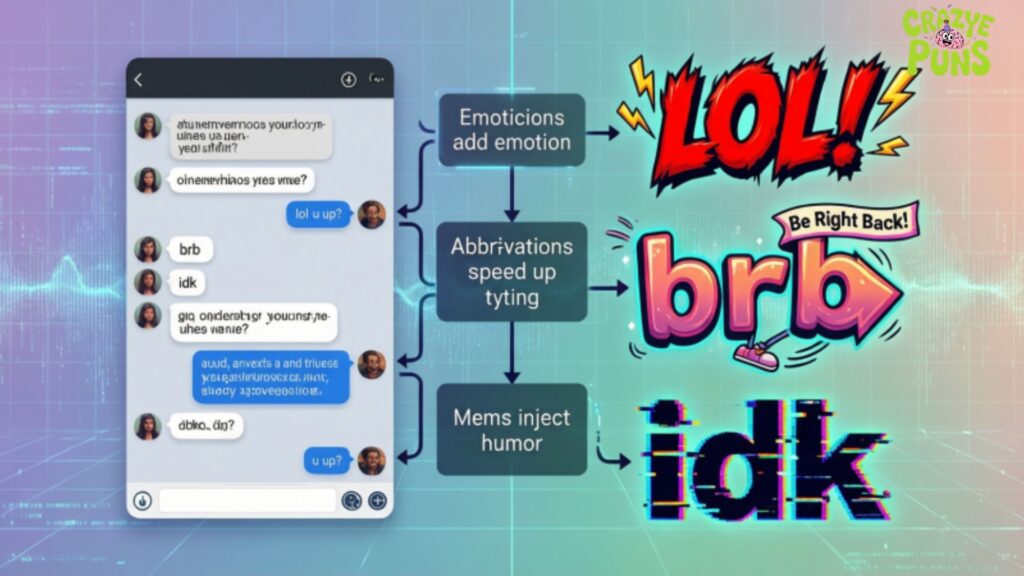
When you’re texting your bestie at 2 AM and they suggest driving three hours for gas station tacos, you don’t need a formal response. You simply type: “you tweaking bro.” This perfectly captures what “tweaking” mean in slang within digital conversations—it’s shorthand for “that’s ridiculous” wrapped in humor and affection.
In text messages and DMs, tweaking serves multiple conversational purposes. It’s a reality check, a gentle roast, and a way to call out absurdity without being harsh. The beauty is in its casualness—nobody feels attacked when told they’re tweaking because the word comes packaged with playful energy.
Consider these everyday scenarios:
Your coworker claims they’re going to start waking up at 4 AM every day to meditate: “you tweaking if you think that’s lasting more than two days.” Your sister insists she saw your favorite celebrity at the local grocery store in your tiny hometown: “girl, you tweaking—he doesn’t even know our state exists.” Your friend is spiraling because their Instagram post only got 47 likes instead of the usual 50: “stop tweaking over three likes, nobody’s counting but you.”
The digital format amplifies tweaking’s effectiveness. When someone can’t hear your tone, the word itself carries the emotional weight. It’s understood universally across age groups (well, mostly), requires minimal characters, and lands with impact. In group chats, calling someone out for tweaking can become a bonding moment—everyone piles on with laughing emojis, creating shared acknowledgment of the absurdity.
What makes tweaking particularly useful in text is its scalability. You can escalate from “you tweaking a little” to “nah you TWEAKING tweaking” when the situation demands. The repetition, capitalization, or addition of multiple letters (“tweeeeaking”) all modify the intensity without requiring lengthy explanations.
Tweaking Meaning on TikTok, Twitter & Instagram
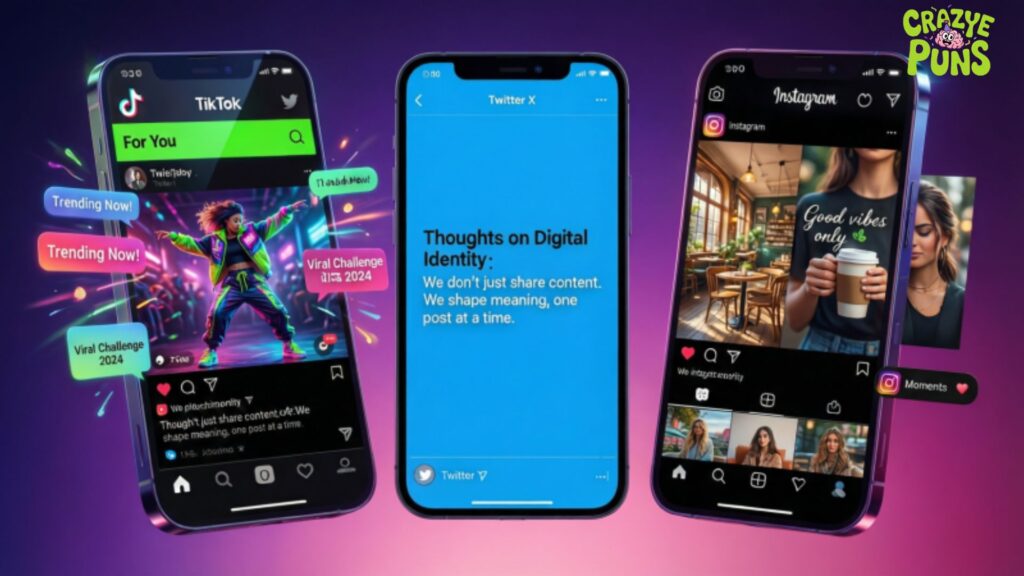
Social media platforms didn’t just adopt tweaking—they supercharged it into viral phenomena. What “tweaking” mean in slang on these platforms goes beyond simple conversation; it’s cultural commentary, meme material, and sometimes, digital protest.
Remember when Instagram temporarily removed the ability to see likes on posts? The platform was flooded with “Instagram tweaking” comments. This wasn’t casual observation—it was collective outrage expressed through slang. When Nike released controversial shoes, Twitter erupted with accusations that the company was “tweaking” with their designs. These instances showcase how tweaking has become the go-to expression for calling out anything that seems off, wrong, or utterly bizarre on a public scale.
TikTok deserves special mention because it’s transformed tweaking into performance art. Creators film elaborate reactions to absurd situations, ending with “they tweaking” delivered directly to camera. These videos rack up millions of views because they tap into shared experiences of witnessing something so strange you have to acknowledge it publicly.
The hashtag #tweaking on TikTok contains everything from comedy sketches to genuine moments of confusion. What makes it powerful is the universality—whether you’re 16 or 46, you recognize the feeling of watching someone or something operating outside normal parameters. The platform’s algorithm loves this kind of relatable content, which is why tweaking-related videos consistently go viral.
Twitter’s character limit makes tweaking even more valuable. When you only have 280 characters to express complex feelings about a celebrity’s questionable take or a brand’s weird marketing decision, “they tweaking” accomplishes what might take a full paragraph to explain. It’s efficient communication that still packs emotional punch.
Instagram comments sections are breeding grounds for tweaking callouts. Someone posts a fitness transformation claiming they achieved it in two weeks? Comments flood in: “you tweaking,” “stop tweaking,” “why you tweaking on us like we don’t know how biology works?” This communal aspect turns what “tweaking” mean in slang into a form of collective fact-checking and reality enforcement.
Serious or Literal Use of “Tweaking”
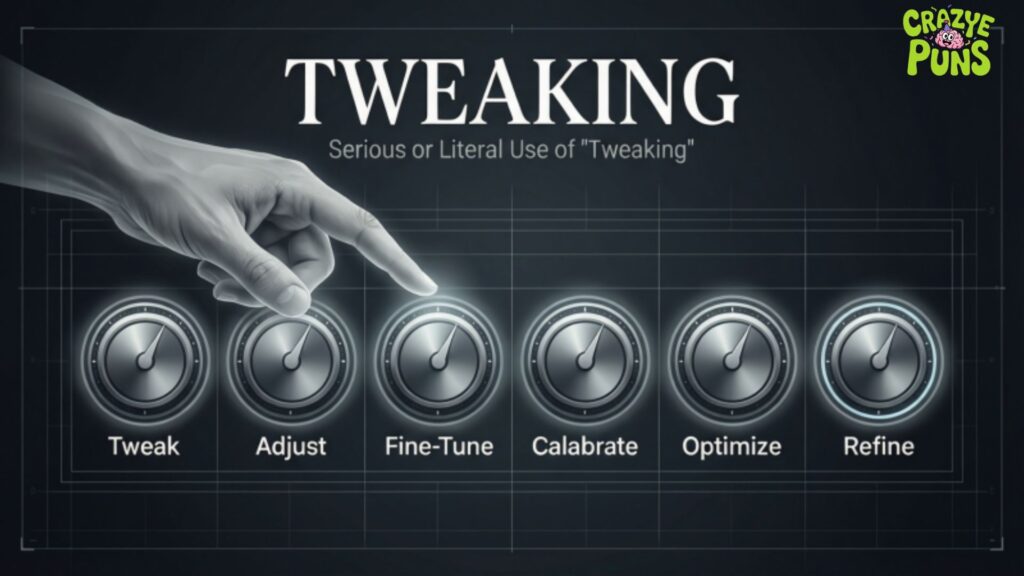
While modern slang usage dominates, we can’t ignore that tweaking retains its serious, literal meaning in specific contexts. Understanding both definitions is crucial for navigating conversations responsibly.
In medical, psychological, and addiction recovery circles, tweaking still refers to the dangerous state induced by stimulant drugs, particularly methamphetamine. This isn’t slang—it’s clinical terminology describing a genuine crisis state. Someone experiencing literal tweaking might display paranoia, aggression, hallucinations, insomnia, and compulsive behaviors. It’s a serious condition requiring intervention, not a punchline.
This dual existence creates potential for confusion and insensitivity. When what “tweaking” mean in slang diverges so dramatically from its literal meaning, we risk trivializing a serious issue. Imagine someone discussing a family member’s substance abuse struggle and hearing “stop tweaking” as a dismissive joke—the disconnect would be painful.
Context awareness becomes essential. In professional settings, medical discussions, or conversations about addiction, assume the literal meaning. In casual social settings with friends your age, the slang interpretation likely applies. When in doubt, clarify rather than assume.
There’s also the middle ground—using “tweaking” to describe genuine mental distress without drug involvement. Someone experiencing extreme anxiety, paranoia, or stress-induced behavior might be described as “tweaking out” in a more serious (though still colloquial) way. This usage acknowledges real psychological struggle while staying within informal language boundaries.
The coexistence of these meanings reflects language’s complexity. Words serve different communities simultaneously, carrying varied weights depending on who’s speaking and who’s listening. Responsible communicators recognize these layers and adjust their language accordingly.
When & How to Use “Tweaking” Correctly
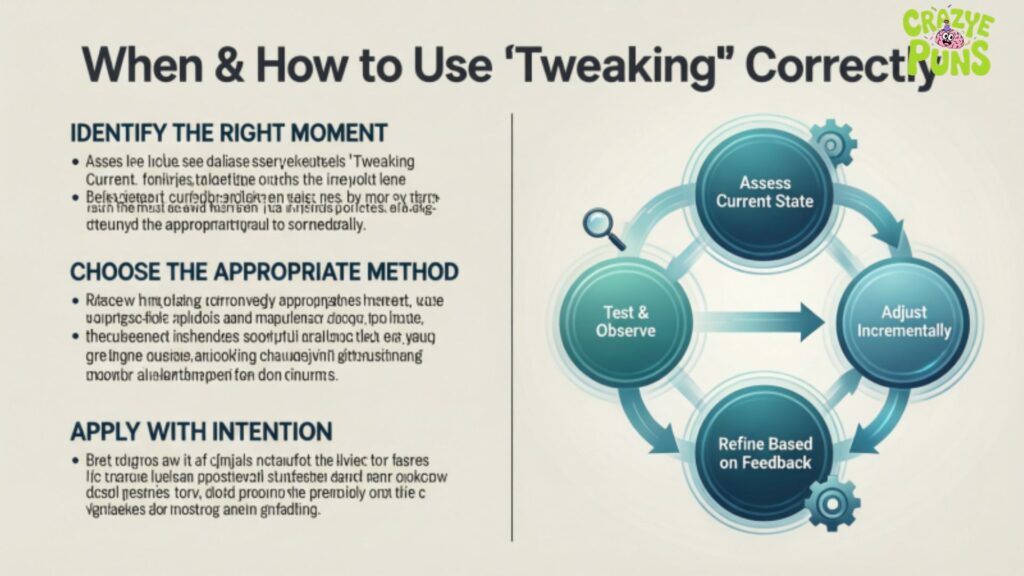
Mastering tweaking requires understanding not just what “tweaking” mean in slang but when and how to deploy it effectively. Like any linguistic tool, it works brilliantly in some situations and falls flat in others.
Perfect scenarios for using tweaking:
When someone makes an outrageous claim: Your friend insists they could definitely beat a professional athlete in their sport? That’s prime tweaking territory. When confronting exaggeration: Someone dramatically claims their minor inconvenience ruined their entire life? “You tweaking” brings perspective. When gentle mockery is appropriate: Your buddy suggests buying a boat when they can barely afford rent? Tweaking is the friendly reality check they need. When something genuinely doesn’t make sense: A brand makes a bizarre marketing decision, a celebrity posts something confusing—calling out tweaking behavior is fair game.
How to deliver it effectively:
Match your tone to your relationship. Close friends can handle direct “you tweaking” statements; acquaintances might need softer approaches like “that seems a bit much, no?” or “are you sure about that?” Consider adding humor modifiers: “you tweaking fr fr” (for real, for real) or “you gotta be tweaking” keeps things light. Use it as a question for gentler impact: “are you tweaking right now?” invites explanation rather than outright dismissal. Follow up with explanation: “you tweaking because [specific reason]” shows you’re not just dismissing but actually engaging with their point.
The word works best when there’s mutual understanding and comfort. In established friendships where playful roasting is the norm, tweaking fits naturally. It expresses disbelief without destroying feelings, which is the sweet spot of good slang.
When NOT to Use “Tweaking”
Knowing when to avoid tweaking is just as important as knowing when to use it. Certain situations absolutely demand more careful language choices, regardless of how naturally what “tweaking” mean in slang might fit your vocabulary.
Avoid tweaking in these contexts:
Professional environments: Your boss makes a questionable decision? “Tweaking” isn’t the feedback format for performance reviews or business meetings. With people unfamiliar with slang: Older family members, non-native English speakers, or anyone outside your typical social circle might misinterpret entirely. When discussing actual mental health or substance abuse: Using slang about serious issues trivializes real struggles and hurts people dealing with these challenges. During serious disagreements: If someone’s genuinely upset or you’re addressing an actual conflict, dismissing their feelings with “you tweaking” escalates rather than resolves. With authority figures: Teachers, police officers, medical professionals—these interactions require formal communication, not casual slang. When you’re the one potentially wrong: Self-awareness matters. If you might be the one acting irrationally, doubling down with accusations of tweaking makes you look foolish.
Cultural sensitivity also plays a role. Slang doesn’t translate universally across communities, and what lands perfectly in your friend group might offend or confuse others. Before using tweaking (or any slang) with new people, gauge the conversational tone and adjust accordingly.
Additionally, over-reliance on any slang term dilutes its impact. If you respond to everything with “you tweaking,” the phrase loses meaning and you lose credibility. Strategic deployment is key—save it for moments when it truly captures what you want to express.
“Tweaking” in Pop Culture & Music

Pop culture amplifies slang terms from underground whispers to mainstream roars, and tweaking has enjoyed this exact trajectory. What “tweaking” mean in slang has been shaped significantly by its appearances in music, movies, and celebrity culture.
Hip-hop and rap music have been particularly influential in spreading tweaking beyond its original contexts. Artists frequently use the term in lyrics to describe various states—from actual drug-induced paranoia to simply calling out fake behavior or irrational haters. When a rapper with millions of followers uses “tweaking” in a hit song, that word immediately enters the vocabulary of young listeners worldwide.
Consider how artists like Lil Baby, DaBaby, and others have casually dropped “tweaking” into verses, sometimes referring to substances but often just meaning someone’s acting crazy or being dishonest. This musical exposure normalizes the slang meaning while simultaneously keeping listeners aware of the more serious connotation—both exist in the same cultural space.
Social media influencers and content creators have become modern pop culture forces, and they’ve embraced tweaking enthusiastically. When influencers with millions of followers film reaction videos calling out brands, celebrities, or situations as “tweaking,” they’re teaching usage through example to massive audiences.
Meme culture deserves credit too. The “Nah He Tweakin” phenomenon of 2021 perfectly illustrates this. When rapper Lil Nas X released Satan-themed shoes and Instagram’s official account commented critically, hip-hop artist Tony Hawk (who had released skateboard decks infused with his blood) was seen as hypocritical. The comment “nah he tweakin” spread like wildfire, appearing millions of times across posts. Suddenly, people who’d never used the term were deploying it, having learned its meaning through pure viral osmosis.
Television shows targeting younger demographics now include tweaking in dialogue, reflecting how writers recognize its prevalence in authentic youth communication. When fictional characters use the slang naturally, it validates and spreads the term further.
This pop culture saturation means what “tweaking” mean in slang is now understood across generational lines, even if older generations don’t actively use it themselves. Your parents might not say “you tweaking,” but they’ve probably heard it enough to understand the gist.
Common Variations & Related Slang
Language is never static, and tweaking has spawned numerous variations that add flavor and specificity to conversations. Understanding these related terms enriches your slang vocabulary and helps you communicate more precisely.
“Tweakin'” or “tweak”: The shortened versions maintain the same meaning but feel slightly more casual. “Stop tweak” hits different than “stop tweaking”—it’s faster, more dismissive, perfect for quick reactions.
“Trippin'”: This close cousin means essentially the same thing—acting irrationally or saying something ridiculous. In many contexts, they’re interchangeable, though “trippin'” sometimes carries slightly less intensity. “You trippin'” might be the softer version of “you tweaking.”
“Buggin'”: Another synonym in the same family, buggin’ often implies someone’s being paranoid or overthinking. “Why you buggin’?” addresses the same irrationality as tweaking but with distinct flavor.
“Cappin'”: While not identical, cappin’ (lying or exaggerating) often appears alongside tweaking. Someone might be “cappin’ and tweakin'”—both lying AND acting crazy about it.
“Wildin'”: This term describes wild, out-of-control behavior. Someone who’s wildin’ is definitely tweaking, though wildin’ often implies more energetic, outward-focused chaos.
“Tight”: Being tight means being upset or angry about something trivial. “You tight over that? You tweaking” combines both terms for emphasis.
Regional variations exist too. Some areas prefer “geekin'” for similar meanings, while others stick firmly with tweaking. Geographic and cultural backgrounds influence which terms dominate your local slang ecosystem.
Understanding these variations allows you to code-switch effectively—adjusting your language to match your audience while maintaining authentic communication. It also helps you understand others better when they mix and match these terms in conversation.
Funny or Severe Replies to “You Tweaking”
When someone hits you with “you tweaking,” how you respond reveals personality, wit, and social intelligence. The beauty of what “tweaking” mean in slang is that it opens conversational doors rather than slamming them shut.
Funny, playful responses:
“Maybe I am, but I’m right tho” – owning the accusation while standing your ground “Tweaking? I’m bout to be THRIVIN” – redirecting with confidence “You just can’t handle my visionary thinking” – mock-seriousness that acknowledges the absurdity “Somebody gotta keep things interesting around here” – accepting the role of entertaining chaos “Nah you tweaking for thinking I’m tweaking” – the classic reverse Uno card “I’m not tweaking, reality is just catching up to my level” – absurdist humor that leans into the accusation
Severe or serious responses (when necessary):
“I’m being serious about this, actually” – signaling the conversation needs to shift “Let me explain why this makes sense” – inviting real dialogue “This is important to me even if it seems weird” – vulnerability that requests understanding “Maybe it sounds crazy but hear me out” – acknowledging their perspective while requesting space “I get why you’d think that, but…” – validation before explanation
The non-response responses:
Simply sending back “🤨” – the raised eyebrow emoji that says “really?” “…anyway as I was saying” – completely ignoring the accusation “Ok and?” – acknowledging without conceding Leaving them on read – the ultimate power move that says their opinion doesn’t warrant response
The key to responding well is reading the room. Is this playful banter or genuine criticism? Does the person actually think you’re being unreasonable, or are they just keeping conversation lively? Your response should match the energy while potentially elevating or defusing depending on what the moment requires.
Examples of “Tweaking” in Real-Life Scenarios

Theory is great, but nothing beats seeing what “tweaking” mean in slang through actual, relatable scenarios. Let’s explore how tweaking appears in everyday life across various contexts.
Scenario 1: The Overconfident Cook Your roommate, who burns toast regularly, announces they’re making a five-course dinner for a date tomorrow with zero practice. You: “You tweaking if you think that’s not ending in disaster. Maybe start with pasta?” This gentle reality check acknowledges ambition while suggesting practical alternatives.
Scenario 2: The Social Media Detective Your friend has convinced themselves their crush’s Instagram story with a random emoji was definitely a secret message meant specifically for them. They’ve analyzed the posting time, emoji choice, and caption for “hidden meaning.” You: “Bro, you tweaking. That’s just a normal story. You’re reading tea leaves that aren’t there.” This calls out the overthinking without being cruel about their feelings.
Scenario 3: The Impulse Purchase Justification Someone in your group chat proudly announces they just bought a $300 collectible figurine despite complaining about rent money yesterday. Multiple people respond: “You tweaking fr,” “WHO’s tweaking? YOU’RE tweaking,” “the bank account is about to be tweaking.” The group consensus acknowledges questionable financial prioritization.
Scenario 4: The Weather Warrior It’s 85 degrees outside and your friend insists on wearing a winter jacket because “it might get cold later.” You pass them and simply say, “you tweaking in that jacket,” to which they respond, “I stay prepared.” Both statements acknowledge the strangeness while allowing personal choice.
Scenario 5: The Confident Challenger Someone who’s never played basketball claims they could totally take on a college player one-on-one and win. The entire room responds with variations of “you tweaking,” “stop tweaking,” and “the tweakage is real.” This collective response bonds everyone through shared recognition of absurdity.
Scenario 6: The Conspiracy Theorist A coworker starts explaining an elaborate theory about why the office coffee tastes different (involving corporate conspiracies and cost-cutting measures) when really they just changed brands. You: “I think you might be tweaking a little bit—they literally sent an email about switching suppliers.” Evidence-based tweaking callouts are particularly effective.
These scenarios show tweaking’s versatility—it addresses everything from minor quirks to major lapses in judgment, always maintaining a balance between honesty and humor.
Is “Tweaking” Offensive or Just Slang?
This is the million-dollar question that determines whether what “tweaking” mean in slang crosses lines or stays within acceptable communication boundaries. The answer, frustratingly, is: it depends.
As pure slang divorced from its original meaning, tweaking is generally not offensive. It’s playful, widely used, and understood as light callout culture. When your friend tells you “you tweaking” about your questionable Spotify playlist, nobody’s genuinely hurt. This is slang functioning exactly as intended—creating efficient, colorful communication within social groups.
However, context and awareness matter tremendously. Using “tweaking” to dismiss someone’s genuine mental health struggles, anxiety, or emotional distress crosses from playful into harmful. If someone’s expressing real concern or vulnerability and you respond with “stop tweaking,” you’re trivializing legitimate feelings. That’s not offensive slang—that’s just being insensitive.
The word’s connection to substance abuse also creates potential for harm. In communities directly affected by addiction, casual use of “tweaking” might sting differently than it does in spaces removed from those realities. Someone in recovery, someone who’s lost a loved one to drug abuse, or someone currently struggling might find cavalier use of the term painful, even when no offense is intended.
Cultural and generational considerations exist too. What “tweaking” mean in slang to Gen Z might sound completely different to older generations who only know the clinical or drug-related definition. Using it with people outside your age bracket or social circle risks miscommunication at best and offense at worst.
The verdict? Tweaking exists in that complex space where intent, context, relationship, and awareness all determine appropriateness. Within your peer group, in casual settings, about low-stakes situations? It’s harmless slang. When discussing serious topics, with unfamiliar audiences, or in ways that might minimize real struggles? Reconsider your word choice.
Good communicators stay flexible, reading rooms and adjusting language to maintain connection rather than insisting on using specific terms regardless of context. If someone tells you they’d prefer you not use “tweaking” around them, that’s valid—their comfort matters more than your attachment to any particular slang word.
Frequently Asked Questions
What does tweaking mean in slang?
In slang, tweaking usually means someone is acting weird, overreacting, or stressing too much about something small.
Is tweaking always a bad thing in slang?
No, the tweaking meaning in slang can be playful or serious depending on the tone, context, and who is saying it.
What does “you’re tweaking” mean in a conversation?
When someone says “you’re tweaking,” they’re often saying you’re overthinking, exaggerating, or reacting unnecessarily.
Can tweaking be used as a joke?
Yes, the tweaking meaning in slang is often used jokingly among friends to tease someone who’s being dramatic.
Is tweaking slang used mostly by young people?
Mostly yes, but the tweaking meaning in slang has spread across social media, so people of all ages now use it.
Does tweaking slang mean the same as being crazy?
Not exactly. The tweaking meaning in slang is usually lighter and refers to momentary behavior, not mental health.
How do you use tweaking naturally in a sentence?
You can say, “Relax, you’re tweaking over nothing,” to sound casual and natural in everyday speech.
Is tweaking slang offensive?
It can be if used harshly, but the tweaking meaning in slang is usually informal and not meant to insult.
Where did the slang term tweaking come from?
The tweaking meaning in slang evolved from older meanings and became popular through online culture and social media.
Should I use tweaking in professional conversations?
No, the tweaking meaning in slang is best kept for casual chats, not formal or professional settings.
Final Thoughts
Understanding the Tweaking Meaning in Slang helps you follow modern conversations without confusion or awkward pauses. The term often shifts based on tone, setting, and who’s saying it. When you recognize the context, it becomes easier to catch whether it’s playful, critical, or exaggerated. That’s why learning the real Tweaking Meaning in Slang adds confidence to everyday communication.
As slang keeps evolving, staying aware of phrases like Tweaking Meaning in Slang helps you sound more natural and up to date. Using it correctly can make your speech feel more relatable and current. The key is moderation and timing, not overuse. Once you grasp the Tweaking Meaning in Slang, you’ll know exactly when—and when not—to use it.

Henry is a witty wordsmith with over 4 years of experience crafting clever puns and humor blogs. Known for his sharp wit and love for playful language, he’s been tickling funny bones across the internet long before joining CrazyEPuns.com.
Now a proud part of the CrazyEPuns team, Henry continues to turn everyday moments into laugh-out-loud wordplay, spreading smiles one pun at a time. When he’s not brainstorming the next viral joke, you’ll find him sipping coffee and chuckling at his own punchlines — because a good pun is worth repeating!
