

A PMO (Project Management Office) is a management structure designed to standardize project governance processes and facilitate the sharing of resources, methodologies, tools, and techniques across an organization. Its functions can range from providing project management support to taking on the direct management of one or more projects.
Typically, PMOs act as a centralized organizational unit, overseeing the planning, execution, and monitoring of projects and programs throughout the organization to ensure consistency, efficiency, and alignment with strategic goals.
PMO Meaning: Slang vs. Business
Acronyms thrive online, and PMO is one of the most versatile. In texting and social media, it usually conveys strong emotion or frustration. In the corporate world, it refers to a formal structure that ensures projects run smoothly.
Understanding the right meaning of PMO depends entirely on context. Misinterpreting it could lead to awkward online interactions—or mistakes in a business setting. This guide unpacks PMO in slang and pop culture while also explaining its critical role in project management. By the end, you’ll know how to use it correctly in any situation.
PMO Meaning in Texting and Online Slang
On the internet, PMO often stands for “P* Me Off.”** It’s a quick, expressive way to show frustration or annoyance. From a bad app update to a friend’s late reply, PMO lets people vent without typing long sentences.
Examples in text messages:
- “The traffic jam this morning really PMO.” 😂
- “Stop canceling plans last minute. It PMO every time.” 😂
PMO is informal and best avoided in professional or respectful conversations.
PMO on TikTok

TikTok thrives on trends and relatability. PMO often appears as a hashtag or caption for clips showing funny, irritating, or outrageous moments.
Examples:
- A coffee spill video titled: “This kind of morning really #PMO” 😂
- Reaction videos exaggerating frustration or annoyance with #PMO 😂
The acronym resonates with TikTok’s younger audience because it’s short, catchy, and relatable.
PMO on Snapchat and Instagram
Social media users include PMO in stories, captions, and reactions to highlight annoying or frustrating moments.
Typical uses:
- Reacting to daily annoyances 😂
- Commenting on irritating online trends 😂
- Highlighting “fail” moments, like spilling food or losing an online game 😂
The rise of ephemeral stories has made short, impactful acronyms like PMO even more popular.
PMO in Urban Dictionary
Crowdsourced platforms like Urban Dictionary reflect how slang evolves. PMO is consistently defined as “P* Me Off,”** often paired with humorous examples, showing how widely understood it is in online communities.
Variations of PMO in slang:
- PMO’d – Past tense, e.g., “That delay really PMO’d me.” 😂
- PMOS – A pluralized form, less common. 😂
- Regional tweaks – Some subcultures use emojis or abbreviations for emphasis. 😂
These variations show the acronym’s flexibility while keeping its core meaning—expressing irritation—intact.
PMO Meaning in Business and Project Management
In the professional world, PMO stands for Project Management Office, a department that defines standards, provides guidance, and supports project execution across an organization.
A PMO ensures consistency, efficiency, and quality in project delivery.
Quote: “A strong PMO transforms chaos into a roadmap for project success.”
Core objectives of a PMO:
- Standardization: Processes, templates, and reporting formats 😂
- Governance: Compliance with organizational policies 😂
- Alignment: Keeping projects in sync with business goals 😂
- Optimization: Improving project delivery performance 😂
These objectives help organizations achieve predictable, successful project outcomes.
Types of PMOs
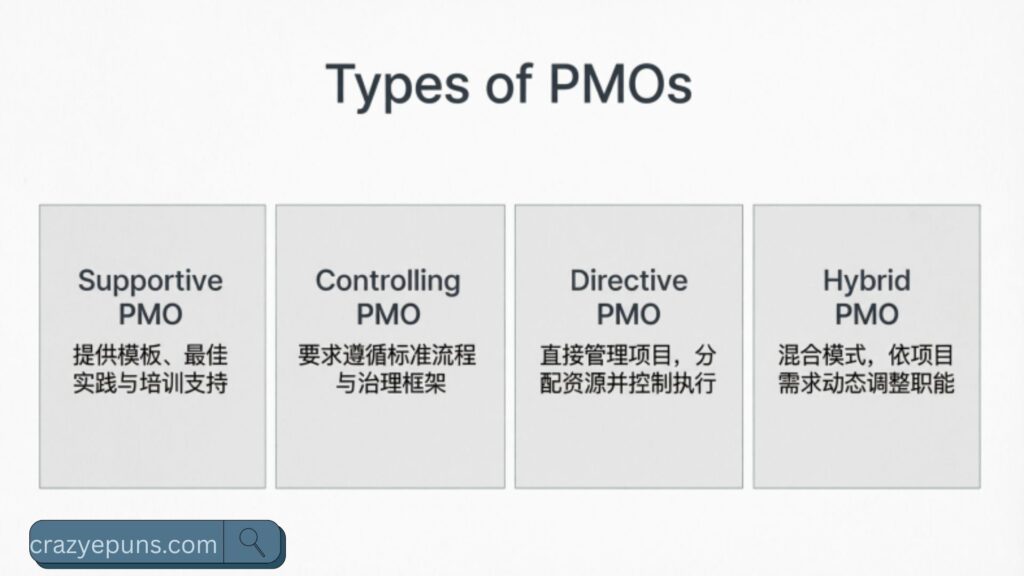
Organizations adopt different types of PMOs depending on their goals and structure:
- Supportive PMO: Offers tools, best practices, and training to project teams. 😂
- Controlling PMO: Enforces compliance with processes, standards, and regulations. 😂
- Directive PMO: Directly manages projects and resources for tighter control. 😂
Example: A start-up may prefer a supportive PMO for flexibility, while large corporations often rely on directive PMOs to maintain strict oversight.
Core Functions of a PMO
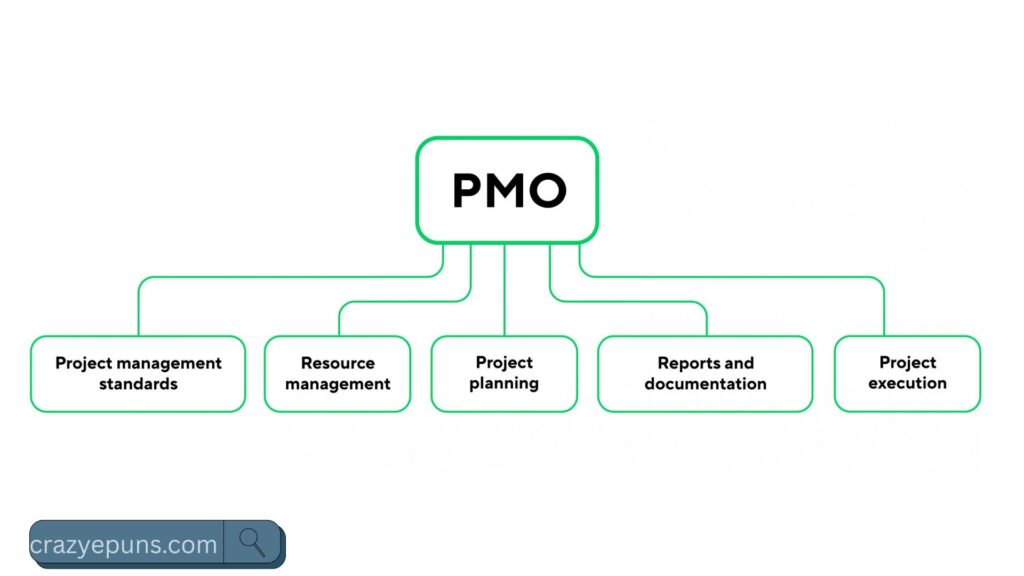
A PMO performs key functions that keep projects on track and aligned with business objectives:
- Resource Allocation: Assigning the right people and tools to projects efficiently. 😂
- Risk Management: Identifying and mitigating risks before they escalate. 😂
- Performance Monitoring: Tracking KPIs, milestones, and deadlines. 😂
- Reporting: Providing leadership with clear insights and updates. 😂
- Training & Development: Enhancing the skills of project managers and teams. 😂
These functions form the backbone of successful project delivery.
PMO Categories by Organizational Hierarchy
The scope of a PMO depends on where it sits in the organization:
| Category | Focus Area | Typical Use Case |
| Enterprise PMO | Entire organization | Strategic alignment across all projects |
| Departmental PMO | Specific department | Specialized projects like IT or HR |
| Project-Specific PMO | Single project or program | Large-scale, high-impact initiatives |
Understanding these categories helps organizations select the right PMO model for their size and goals.
PMO in Real Organizations
Case Study – IBM:
IBM’s global PMO introduced standardized project practices, reducing project delays by 20% and improving cost predictability.
Case Study – NASA:
NASA’s PMO ensures mission-critical projects meet strict timelines and budgets, proving the necessity of strong governance in high-stakes environments.
These examples highlight how a well-structured PMO drives tangible results.
PMO Software and Tools
Modern PMOs rely on specialized tools to streamline workflows and improve visibility:
- Jira: Best for agile project tracking. 😂
- Asana: User-friendly for team collaboration. 😂
- Wrike: Offers robust reporting features. 😂
- Monday.com: Highly visual for planning and task management. 😂
- Microsoft Project: Traditional choice for large-scale enterprise projects. 😂
The right tools reduce manual errors and enhance cross-team collaboration.
PMO Certifications and Membership
Professional development is essential for PMO success. Recognized certifications include:
- PMO-CP (Certified Practitioner) 😂
- PMP (Project Management Professional) 😂
- PRINCE2 (Projects in Controlled Environments) 😂
Membership in organizations like the PMI (Project Management Institute) connects professionals to industry updates, best practices, and networking opportunities.
Common PMO Challenges
Even the most effective PMOs face hurdles that can affect performance:
- Resistance to Change: Teams may resist standardized processes. 😂
- Unclear Roles: Confusion about PMO authority versus project managers. 😂
- Stakeholder Misalignment: Conflicting priorities can hinder progress. 😂
- Inconsistent Metrics: Poorly defined KPIs obscure performance insights. 😂
Overcoming these challenges requires strong leadership, clear communication, and adaptable frameworks.
PMO ROI and Benefits
A well-implemented PMO delivers tangible returns for organizations:
- Improved Delivery: Projects finish on time and within budget. 😂
- Strategic Focus: Prioritizes initiatives aligned with business goals. 😂
- Resource Efficiency: Reduces waste and duplication of effort. 😂
- Risk Reduction: Minimizes costly project failures. 😂
Studies show that organizations with mature PMOs achieve 30–40% higher project success rates compared to those without.
PMO vs Project Manager
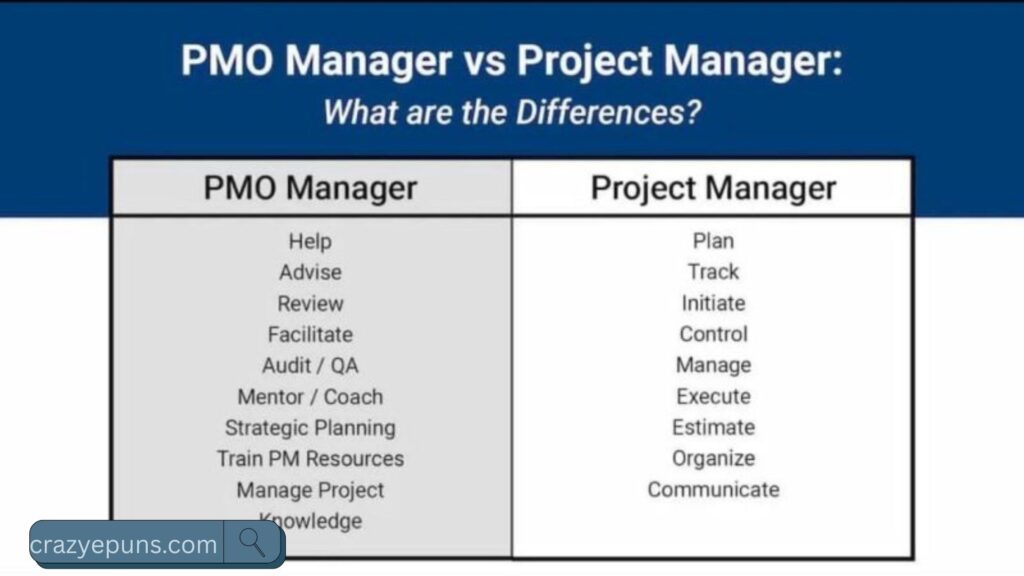
It’s crucial to understand the difference between a PMO and a project manager:
| Feature | PMO | Project Manager |
| Scope | Organization-wide processes | Individual projects |
| Focus | Governance, strategy, oversight | Execution and delivery |
| Accountability | Senior leadership, enterprise goals | Project sponsors, stakeholders |
| Skill Set | Policy-making, metrics, training | Tactical planning, team leadership |
Key takeaway: The PMO supports and guides, while project managers execute specific projects.
The Future of PMO
As businesses adapt to remote work and data-driven strategies, PMOs are evolving into strategic partners:
- AI-Powered Insights: Forecasting project risks and outcomes. 😂
- Remote Collaboration Tools: Managing distributed teams efficiently. 😂
- Data-Driven Decision Making: Using analytics to guide project priorities. 😂
- Hybrid Project Approaches: Combining agile and traditional methodologies. 😂
Modern PMOs are shifting from process enforcers to innovation and strategy partners.
Quick Comparison Table – All PMO Meanings
| Context | Meaning | Typical Use Case |
| Slang/Texting | PMO = “P*** Me Off” | Expressing frustration in casual chats |
| Business/Professional | PMO = Project Management Office | Project governance and efficiency |
| Other Niche Uses | Industry-specific | Specialized internal jargon |
How a PMO Supports Project, Program, and Portfolio Managers
A Project Management Office (PMO) plays a vital role in enabling project managers, program managers, and project portfolio managers to succeed. Their support spans multiple areas, ensuring projects run smoothly and align with organizational goals. Key ways a PMO provides support include:
- Managing Shared Resources: Efficiently allocates people, tools, and budgets across all projects within the organization.
- Developing Methodologies and Best Practices: Creates and maintains project management standards, processes, and templates for consistency.
- Coaching and Mentoring: Provides training, guidance, and oversight to help managers improve performance and skills.
- Monitoring Compliance: Conducts audits to ensure projects follow organizational policies, procedures, and templates.
- Maintaining Documentation: Develops and manages project policies, templates, and other shared resources known as organizational process assets.
- Coordinating Communication: Facilitates clear communication across projects, departments, and stakeholders to avoid confusion and delays.
By offering these services, a PMO ensures that project managers focus on execution, program managers maintain alignment across projects, and portfolio managers make strategic decisions with accurate, timely information.
Effective vs. Ineffective PMOs
Not all PMOs deliver the same value. Their effectiveness often determines how well projects, programs, and portfolios perform. Here’s a clear comparison:
| Effective PMO | Ineffective PMO |
| Exhibit strong leadership. | Lack a distinctive purpose. |
| Implement standardized project management methodologies. | Absence of standardized procedures. |
| Consistently deliver project success. | Display rigidity and fail to adapt to new business conditions. |
| Utilize advanced software and data-driven decision-making. | Struggle with inefficient practices causing project delays. |
| Champion a culture of continuous learning and problem-solving. | Resist change, failing to meet evolving project demands. |
Key takeaway: An effective PMO acts as a strategic enabler, while an ineffective PMO can become a bottleneck.
Key Roles & Responsibilities of a PMO
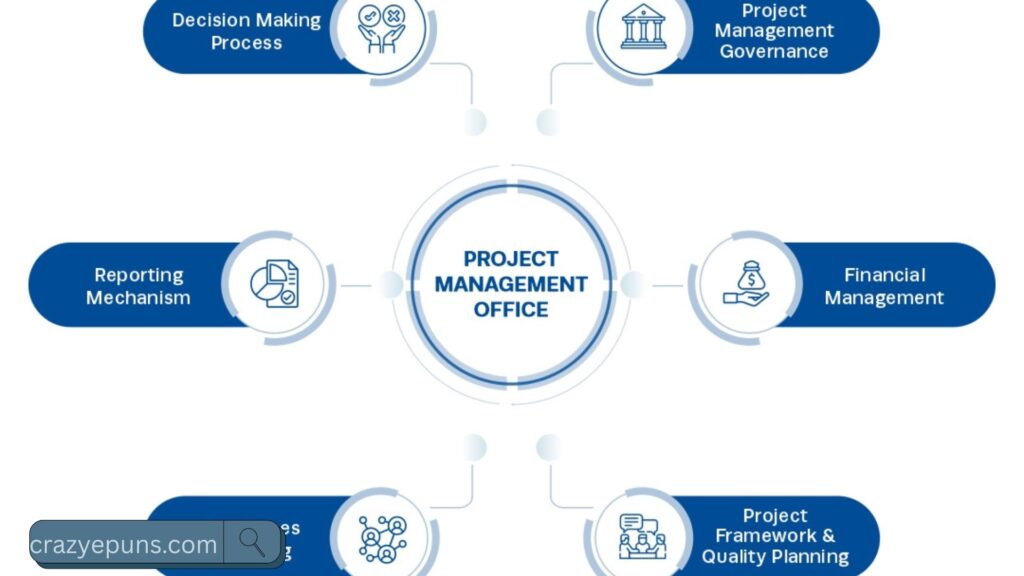
A PMO adds value by performing several critical functions:
- Strategic Planning: Aligning projects with business goals.
- Governance: Ensuring compliance with standards, policies, and procedures.
- Resource Allocation: Assigning people, tools, and budgets efficiently.
- Training & Mentoring: Developing skills and improving project management capabilities.
- Performance Tracking & Reporting: Monitoring KPIs and keeping leadership informed.
- Risk Management: Identifying and mitigating potential project risks.
- Project Quality Assurance: Maintaining consistent standards and ensuring successful outcomes.
By mastering these roles, a PMO becomes an essential backbone for organizational success, guiding teams and projects toward predictable, high-quality results.
Frequently Asked Questions
What does PMO mean in texting and social media?
In casual online conversations, PMO often stands for “P* Me Off”**, used to express frustration or annoyance quickly.
What is a PMO in business terms?
In professional settings, PMO stands for Project Management Office, a department that guides projects, programs, and portfolios to achieve organizational goals efficiently.
How does a PMO help project managers?
A PMO supports project managers by providing standardized processes, resource allocation, risk management, and training, ensuring projects run smoothly.
What are the types of PMOs in organizations?
PMOs can be Supportive (offers guidance), Controlling (enforces compliance), or Directive (manages projects directly) depending on organizational needs.
What makes an effective PMO?
An effective PMO shows strong leadership, standardizes methodologies, embraces change, and uses data-driven decision-making to deliver successful projects.
What are common challenges faced by a PMO?
PMOs may encounter resistance to change, unclear roles, stakeholder misalignment, and inconsistent performance metrics, requiring strong communication and leadership to overcome.
What’s the difference between a PMO and a project manager?
A PMO focuses on governance, strategy, and oversight across multiple projects, while a project manager executes individual projects to meet objectives.
Why is PMO important for business success?
A PMO improves delivery on time and budget, aligns projects with strategic goals, optimizes resources, and reduces project risks, boosting organizational performance.
Can PMO trends evolve with technology?
Yes, modern PMOs use AI, data analytics, remote collaboration tools, and hybrid project approaches to adapt to changing business and remote work environments.
How do I know if a PMO is effective or ineffective?
Effective PMOs deliver consistent project success, embrace learning, and innovate, while ineffective PMOs lack purpose, resist change, and struggle with inefficiencies.
Final Thoughts
Understanding PMO meaning goes beyond just knowing an acronym—it’s about context. Whether it’s slang in online chats or a formal Project Management Office guiding complex business initiatives, the PMO plays a crucial role in communication and productivity.
A strong grasp of PMO allows you to navigate digital conversations confidently, while also appreciating the strategic backbone it provides in organizations. By knowing its meanings, functions, and impact, you can save time, avoid misunderstandings, and maximize project success in both personal and professional settings.

Henry is a witty wordsmith with over 4 years of experience crafting clever puns and humor blogs. Known for his sharp wit and love for playful language, he’s been tickling funny bones across the internet long before joining CrazyEPuns.com.
Now a proud part of the CrazyEPuns team, Henry continues to turn everyday moments into laugh-out-loud wordplay, spreading smiles one pun at a time. When he’s not brainstorming the next viral joke, you’ll find him sipping coffee and chuckling at his own punchlines — because a good pun is worth repeating!
