

Curious about what “ASL” really means and why everyone keeps typing it in chats and social media? Whether you’re scrolling through messages, online forums, or gaming platforms, understanding this acronym can save you from awkward misunderstandings and help you connect with others more confidently. Knowing the meaning of ASL isn’t just about decoding letters—it’s about joining the digital conversation with ease and clarity.
Beyond just letters, ASL can carry context that tells you a lot about someone’s age, location, or mood in a few keystrokes. By learning its true meaning and common uses, you’ll not only decode messages faster but also communicate smarter online, making your chats smoother, friendlier, and way more relatable.
What Does ASL Mean in Slang?
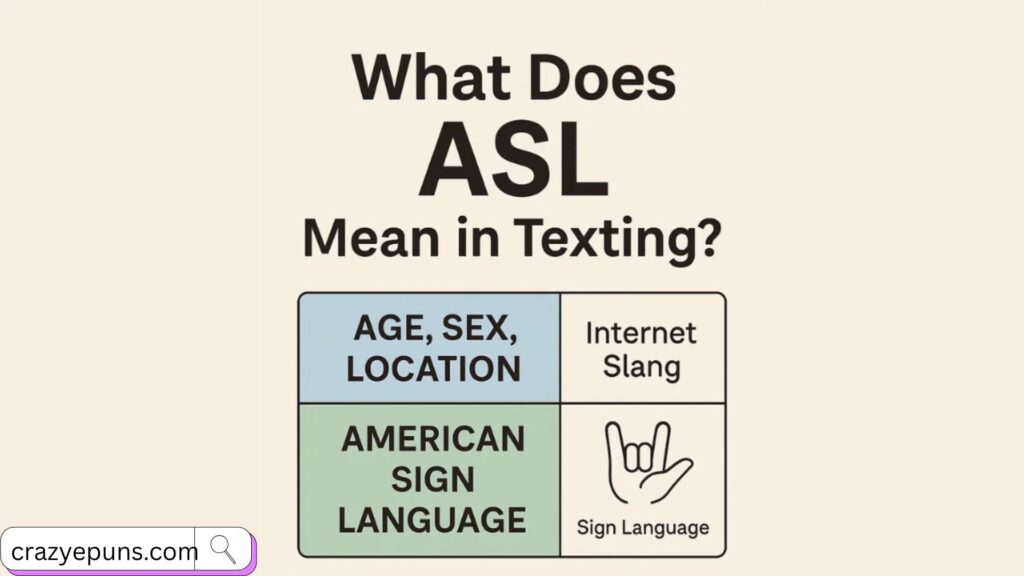
In modern internet slang, ASL stands for “as hell.” It’s used to intensify or emphasize a feeling, quality, or description—basically, it means “very” or “extremely.”
Examples:
- “I’m tired asl” → I’m really tired.
- “She’s cute asl” → She’s very cute.
- “That test was hard asl” → That test was extremely hard.
ASL makes ordinary sentences more expressive and punchy, perfect for texting, social media, and fast online conversations.
Examples of ASL in Real Context
| Example | Meaning | Emotion/Intent |
| “That pizza was good asl” | Very tasty | Positive |
| “It’s cold asl outside” | Extremely cold | Neutral |
| “You annoying asl rn” | Very annoying | Negative |
| “I’m sleepy asl fr” | Super tired, really | Casual emphasis |
In short, ASL is used for exaggeration or emphasis, similar to raising your tone in real-life conversation.
The Origin of ASL Slang
Originally, ASL had a different meaning online.
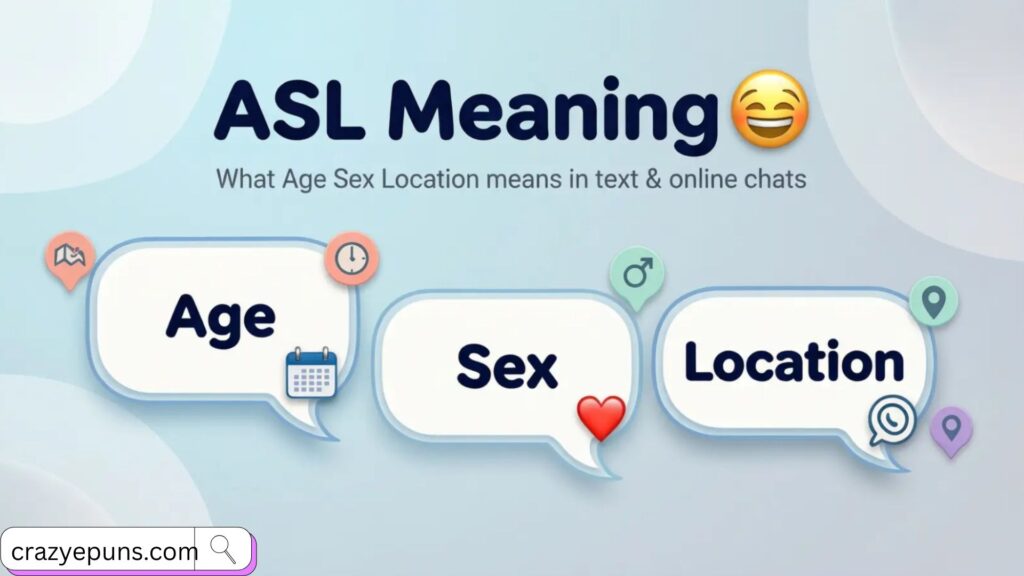
In early chatrooms (AOL, Yahoo, MSN), ASL meant “Age, Sex, Location.” It was a quick way to introduce yourself:
- “Hey, asl?” → “How old are you, what’s your gender, and where are you from?”
Over time, as younger users joined platforms like Snapchat, Twitter, and TikTok, the meaning shifted. By the late 2010s, ASL became shorthand for “as hell.”
Timeline of ASL’s Evolution:
| Year | Meaning | Platform/Trend |
| 1990s | Age, Sex, Location | AOL, Yahoo Chat |
| 2000s | Same | MSN Messenger |
| 2010s | Shift to “as hell” | Twitter, texting culture |
| 2020s | Popular slang intensifier | TikTok, memes, Gen Z language |
This change highlights how internet language evolves with each generation.
ASL vs. ASL (American Sign Language)
It’s easy to confuse ASL slang with American Sign Language, a complete visual language used by the Deaf and hard-of-hearing community.
Key Difference:
| Context | Meaning | Example |
| Slang | “As hell” – intensifier | “That’s funny asl” |
| Language | American Sign Language | “I’m learning ASL at college.” |
Tip: If ASL appears after an adjective or verb, it’s probably slang. If it’s used as a noun, it refers to the language.
Discover More Snowball Kiss Meaning – What It Really Means & Why It Sparks So Much Curiosity In 2026
ASL in Text, Chats, and Social Media
Social media gave ASL slang a new life. It thrives in platforms where space is limited and informality rules—like TikTok captions, X/Twitter posts, DMs, and Instagram comments.
Examples of ASL in action:
- TikTok: “That transition was smooth asl.”
- Snapchat: “You look good asl rn 😭.”
- Twitter/X: “Weather behavior asl today.”
Its lowercase style (asl) reflects casual texting culture, where people type fast, skip punctuation, and rely on emojis to convey emotion.
Platforms Where ASL Thrives
- TikTok – Comments like “funny asl” or “fine asl” under trending videos.
- X/Twitter – Adds emotion or attitude in short tweets.
- Snapchat – Used in private conversations for humor or emphasis.
- Instagram – Common in captions, comments, and meme pages.
The Meme Factor: How ASL Went Viral
ASL spread explosively thanks to memes and TikTok trends, often used sarcastically, ironically, or humorously.
Popular meme examples:
- “My sleep schedule messed up asl 😂”
- “This food bussin asl fr 🍔🔥”
It’s often paired with other slang like fr (for real) or ong (on God) to heighten tone. Its flexibility allows it to express funny, dramatic, excited, or mad emotions with just three letters.
What is American Sign Language (ASL)?
American Sign Language (ASL) is a complete, natural language with its own grammar, vocabulary, and linguistic rules, distinct from English. It is expressed primarily through hand movements, facial expressions, and body gestures. ASL is the primary language for many deaf and hard-of-hearing North Americans, and some hearing people also use it to communicate.
Is Sign Language the Same Everywhere?
There is no universal sign language. Each country or region may have its own system. For example:
- British Sign Language (BSL) is different from ASL, and users of one may not understand the other.
- Some countries adopt features of ASL into their own sign languages, but each remains unique.
Where Did ASL Originate?
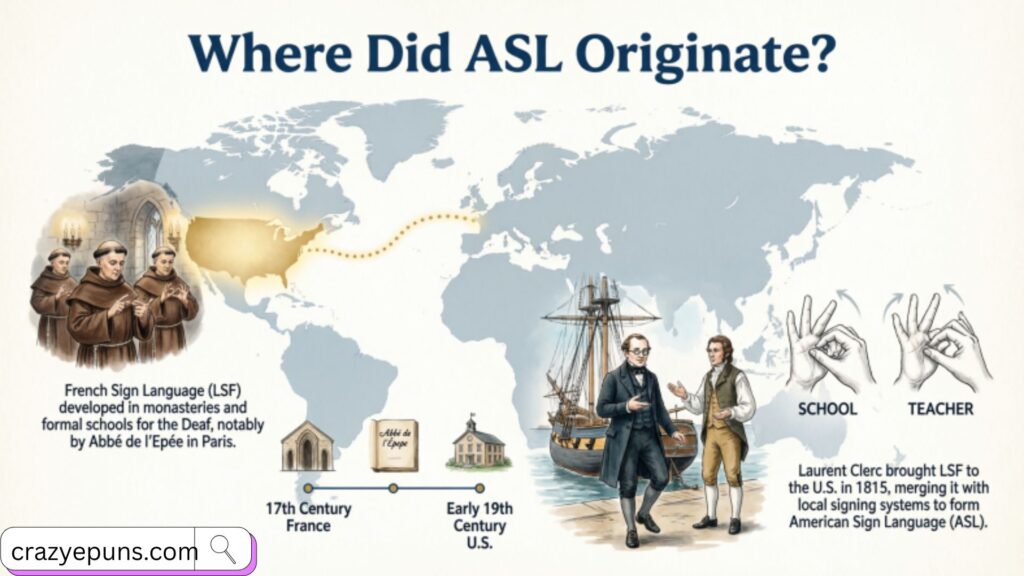
ASL was not invented by any single person or committee. Its origins date back over 200 years, emerging from a mix of:
- Local sign languages in the U.S.
- French Sign Language (LSF / Langue des Signes Française)
Modern ASL incorporates elements of LSF but is distinct from today’s French Sign Language. While some signs may look similar, ASL and LSF are not mutually intelligible.
How Does ASL Compare with Spoken Language?
ASL is a fully developed language, separate from English. It has:
- Its own rules for word order, word formation, and pronunciation.
- Ways to signal questions or statements differently from spoken language—for example, raising eyebrows, widening eyes, or tilting the body forward.
Like spoken languages, ASL has regional dialects and accents, as well as differences based on age, gender, and individual style.
Fingerspelling in ASL
Fingerspelling is used to spell English words, especially:
- Proper names
- Technical terms or specific English words
Each letter corresponds to a unique handshape, allowing users to integrate English vocabulary into ASL conversations.
How Do Children Learn ASL?
Children acquire ASL in ways similar to spoken languages:
- Deaf children of deaf parents: Acquire ASL naturally, just as hearing children acquire spoken language.
- Deaf children of hearing parents: Often learn ASL from:
- Deaf peers
- Parents who learn sign language alongside their child
- Teachers or caregivers fluent in ASL
- Deaf peers
Interestingly, 9 out of 10 deaf children are born to hearing parents, so exposure to ASL may require deliberate introduction.
Why Early Language Learning Matters
Early exposure to language, whether signed or spoken, is crucial for a child’s:
- Cognitive development
- Social skills
- Communication abilities
Research shows that the first few years of life are critical for language development. Hospitals in the U.S. now routinely screen newborns for hearing loss, allowing parents to:
- Learn about communication options
- Begin early language acquisition during this crucial developmental stage
Early learning lays the foundation for lifelong communication and learning success.
ASL in Conversations – Positive vs Negative Use

ASL isn’t just for jokes—it reflects tone, context, and intent.
Positive Uses:
- “You smart asl.” → Compliment or admiration
- “This movie funny asl.” → Genuine enjoyment
- “That outfit cute asl.” → Flattering tone
Negative Uses:
- “You slow asl.” → Insulting or mocking
- “That game trash asl.” → Frustration or critique
- “He rude asl.” → Critical tone
Neutral/Casual Uses:
- “I’m sleepy asl rn.” → Simply stating fact
- “It’s late asl.” → Observation
Key takeaway: Tone changes meaning. Friendly tone = playful; harsh tone = rude. Context is everything.
ASL vs Other Internet Slang
ASL is one of many online intensifiers, often compared to AF, FR, ONG, and SMH.
| Slang | Meaning | Use Level | Example |
| ASL | As hell | Mild | “Cold asl” |
| AF | As f*** | Strong | “Tired af” |
| FR | For real | Affirmation | “That’s true fr” |
| ONG | On God | Emphasis on truth | “That was fun ong” |
| SMH | Shaking my head | Disapproval | “Bro, smh” |
Note: ASL is considered PG-friendly, making it popular among younger users and content creators who want expressive yet clean language.
Should You Use ASL in Conversation or Text?
If you’re texting friends or commenting online, ASL fits perfectly—it makes your tone sound natural, expressive, and playful. However, in formal or professional settings, it’s best to avoid slang
✅ When It’s Okay to Use
- Casual chats with friends
- Social media posts or comments
- Light-hearted group texts
- Memes or jokes
❌ When to Avoid It
- Work emails or school assignments
- Professional social media posts (LinkedIn, business pages)
- Conversations with people unfamiliar with online slang
💡 Pro Tips for Using ASL
- Keep it lowercase (“asl”) for a natural flow.
- Don’t overuse it—too much slang can dilute meaning.
- Pair it with emojis or other slang to adjust tone.
Examples:
- “That food good asl 😋” → friendly, playful
- “That teacher annoying asl 😒” → borderline rude
Knowing your audience matters as much as knowing the slang itself.
Real-Life Examples and Case Studies
Case Study 1: TikTok Trend
Creators used “asl” in captions like:
“This filter funny asl 😂”
The algorithm favored slang-filled comments, helping “asl” go viral under trending videos.
Case Study 2: Twitter/X Conversations
Influencers and meme pages used ASL for comedic timing:
“I’m tired asl but can’t sleep 😭”
These tweets resonated widely because the tone was instantly relatable.
Case Study 3: Gen Z vs. Millennials
- Gen Z: Uses “asl” as a softer alternative to “af”, suitable for mixed audiences.
- Millennials: Often confuse it with “Age, Sex, Location,” showing how internet slang evolves across generations.
Common Misconceptions About ASL Slang
- “ASL is rude” – Not necessarily; context and tone matter.
- “Cute asl” → friendly
- “Ignorant asl” → insulting
- “Cute asl” → friendly
- “Only teens use ASL” – Many adults use it casually online.
- “ASL means American Sign Language here” – Context usually makes the meaning clear.
- “ASL is new” – It’s not; it’s a recycled abbreviation that evolved with modern internet culture.
Frequently Asked Questions
What does ASL mean in texting?
In texting, ASL usually stands for Age, Sex, Location, a quick way to ask someone for basic info in chats.
Is ASL only used in chatrooms?
No! ASL is common in messaging apps, social media, and gaming platforms where people want quick introductions.
Can ASL mean something else?
Yes! ASL can also mean American Sign Language, so context matters—look at the conversation to be sure.
Why do people ask for ASL online?
It’s a fast way to get to know someone without long conversations, especially in anonymous chats or forums.
Is it safe to share my ASL online?
Be careful—sharing personal info like age or location publicly can be risky, so only share with trusted people.
How do I respond if someone asks my ASL?
You can answer briefly with age, gender, and location or politely decline if you’re uncomfortable.
What’s the history of ASL in chats?
ASL became popular in early internet chatrooms and instant messaging, helping users quickly introduce themselves.
Does everyone know what ASL means?
Not always! Younger users and internet natives recognize it quickly, but some people might confuse it with American Sign Language.
Can ASL be used in professional chats?
Generally no. ASL is informal shorthand and not suitable for professional or work-related communication.
How can I remember the meaning of ASL?
Think of it as a shortcut to meet someone online: Age, Sex, Location—but always check context for other meanings!
Final thoughts
communication. Whether you’re texting, chatting in forums, or gaming, recognizing how and when to use ASL can prevent confusion and help you connect with others effortlessly.
Next time you see “ASL” pop up in a conversation, you’ll not only decode it instantly but also appreciate the small ways digital shorthand shapes our online interactions. Mastering these little shortcuts makes your communication smarter, faster, and more in tune with today’s digital world.

Henry is a witty wordsmith with over 4 years of experience crafting clever puns and humor blogs. Known for his sharp wit and love for playful language, he’s been tickling funny bones across the internet long before joining CrazyEPuns.com.
Now a proud part of the CrazyEPuns team, Henry continues to turn everyday moments into laugh-out-loud wordplay, spreading smiles one pun at a time. When he’s not brainstorming the next viral joke, you’ll find him sipping coffee and chuckling at his own punchlines — because a good pun is worth repeating!
